Have you ever wondered why bank cheques are still the "king" of large transactions despite wire transfers and mobile apps? The secret is simple: Security and Trust. In this guide, we will explain everything you need to know about cheques in simple language, away from complexity, and teach you how to print your own cheques to look professional to everyone.

In Short.. What is a Bank Cheque?
Imagine a cheque is a "formal letter" from you to the bank, saying: "Dear Bank, please pay this amount from my account to this person."
This letter (the cheque) has great legal power; it guarantees the rights of the person receiving the money and is considered a formal and recognized payment method everywhere.
Who are the "Heroes" of the Cheque?
1.You (The Drawer): The person who writes and signs the cheque.
2.The Bank (The Drawee): The entity that holds your money and executes the order.
3.The Beneficiary (The Payee): The person or company that will receive the amount.
Types of Cheques.. Which One to Choose?
Not all cheques are the same; each type has a specific "mission":
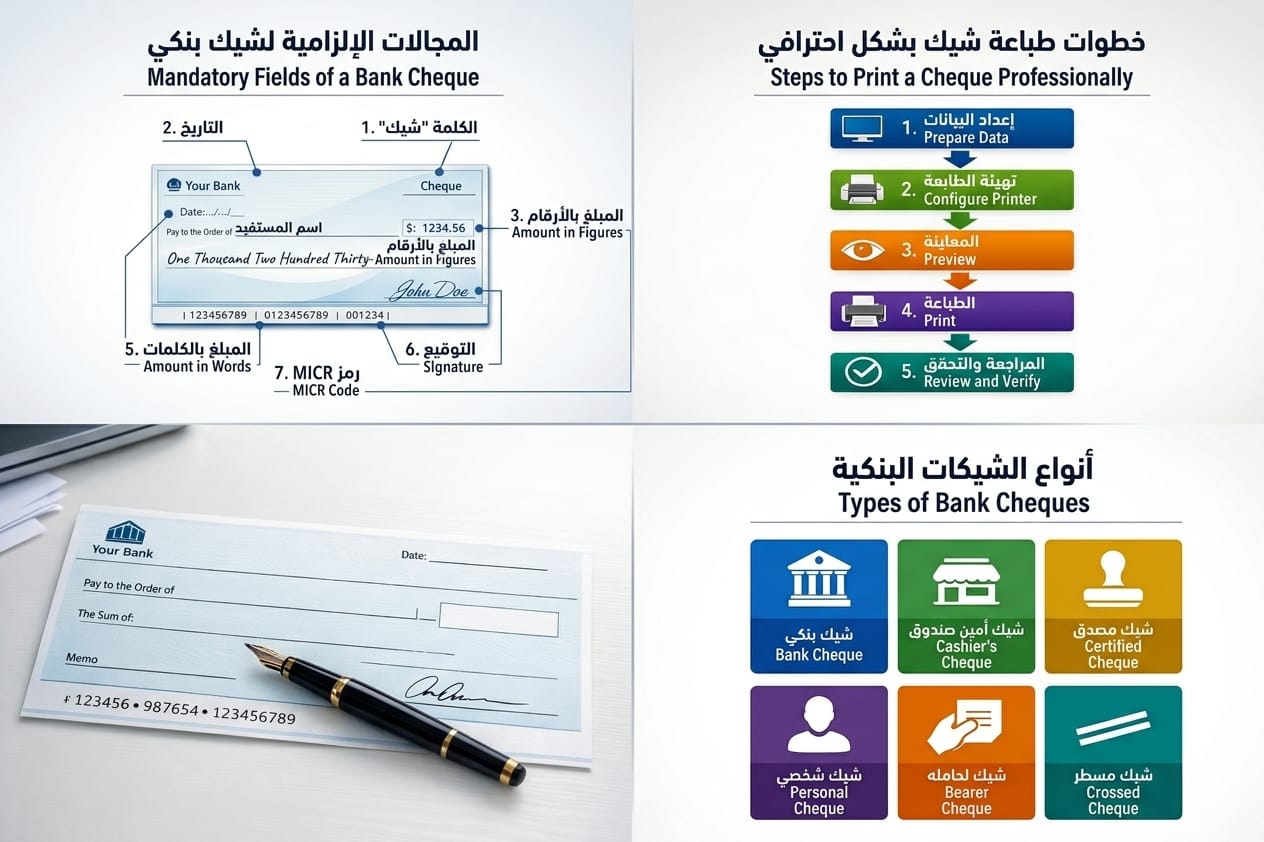
•Standard Cheque: The one you write from your chequebook and sign yourself.
•Certified Cheque: A standard cheque that the bank stamps and says: "I have reserved this amount in the customer's account, and they cannot spend it for any other purpose." This type gives great confidence to the seller.
•Cashier's Cheque: This cheque doesn't come from your chequebook; rather, the bank itself issues it from its own account. It is the most guaranteed type of cheque of all.
•Crossed Cheque: If you see two parallel lines on the corner of the cheque, it means the bank will not give the amount in "cash" to the beneficiary; instead, it will only deposit it into their bank account. This type is excellent for preventing theft.
How to Fill a Cheque Without Errors? (Mandatory Data)
To ensure your cheque is valid and not rejected by the bank, make sure it includes these items:

The word "Cheque": Usually printed and ready.
2.The Amount: Write it in numbers (e.g., 5000) and in words (Five Thousand Dollars only). Tip: Always start from the far right so no one can add extra digits! It is always recommended to use a check printing program such as the My Cheque platform to avoid incorrect spelling.
3.Payee Name: Write the full name of the person or the official name of the company.
4.The Date: Don't forget to write today's date or the maturity date.
5.Your Signature: Ensure your signature matches exactly what is registered with the bank.
How to Print Your Cheques Professionally? (Goodbye to Handwriting)
Handwriting can be tiring, and sometimes we make mistakes in "writing the amount in words," which causes the cheque to be rejected. The solution is Printing.

Why is Printing Better?
•Professional Appearance: It gives the impression that your company is very organized.
•More Security: It is very difficult to tamper with a printed cheque compared to a handwritten one.
•Speed and Accuracy: With one click, everything is written with millimeter precision.
How to Start?
1.Use Simple Software: There are easy accounting programs or even dedicated Excel templates for cheque printing.
2.Printer Setup: Place a regular piece of paper first to test the placement of the words, then place the original cheque paper.
3.Good Ink: Ensure your printer ink is clear so the bank's machines can read it easily.
3 Golden Tips to Protect Your Cheques
•Leave No Gaps: When writing the name or amount, fill the gaps with lines so no one can add any words.
•Never Sign a Blank Cheque: This is the biggest mistake you can make; never sign before writing the amount and the name.
•Check the Balance: Issuing a cheque without sufficient funds can expose you to legal problems and large fines.
Conclusion
A bank cheque is a great tool for organizing your large financial affairs. It's easy to use, and printing it makes you look professional and protects your rights and the rights of others. All you have to do is follow the simple steps we mentioned to ensure a successful and secure financial transaction.